
 5720 Bellaire Blvd # D, Houston, TX 77081, United States
When your baby’s first teeth come in, around 6 months, they are at risk of developing caries. Baby Bottle Tooth Decay is a common name for tooth decay in babies and young children. It usually affects the upper front teeth but can also affect other teeth. Sometimes babies’ and toddlers’ teeth get so badly decayed that they can’t be saved and must be taken out.
Bad teeth can be stopped, which is good news! By the time they are 3 years old, most children have all 20 of their baby teeth. Your child’s jaws will also grow as they age, making room for permanent teeth.
Cleaning Your Child’s Teeth
In the first few days after birth, clean your baby’s mouth by wiping the gums with a clean, damp gauze pad or washcloth. Decay can start as soon as teeth come in. Most babies get their front four teeth when they are about 6 months old, but some don’t get their first tooth until they are 12 or 14 months old.
Brush your child’s teeth twice a day with a child-sized toothbrush and a pea-sized amount of fluoride toothpaste until you’re sure your child can do it on their own. It would help if you started cleaning between your child’s teeth every day when they have two teeth that touch.
Caretakers should start brushing the teeth of children younger than 3 years old as soon as the first tooth comes in. They should use a small amount of fluoride toothpaste, about the size of a grain of rice, to do this. Brush your teeth well twice daily, in the morning and at night, or as your dentist or doctor tells you to. Watch your kids brush their teeth to ensure they use the right amount of toothpaste.
Use a pea-sized amount of fluoride toothpaste for kids ages 3 to 6. Brush your teeth well twice daily, in the morning and at night, or as your dentist or doctor tells you to. Watch your kids brush their teeth and tell them not to swallow the toothpaste.
How to Keep Your Child’s Teeth Healthy: Tips from a Dentist
General health, including dental health, is more than having clean teeth. It means how well your teeth, gums, cheeks, palate, lips, and jaws are doing. When we care for our mouths, we can talk, chew, taste, swallow, and smile without pain.
A healthy mouth is also important for our health as a whole. For example, gum disease or other oral diseases can make a person more likely to get diabetes. On the other hand, the mouth is sometimes called the body’s “window” because it can show signs of other diseases. For example, canker sores may signify a lack of certain nutrients.
Good dental health is important for everyone, but it’s especially important for kids as they grow and develop. A healthy mouth is important for a child’s nutrition as they learn to chew and swallow different kinds and textures of food. A child’s teeth, lips, and tongue are important as they learn to talk and interact with others.
Tooth decay, which is damage to the surface of a tooth’s enamel, is the most common disease in children, even though it can be avoided for the most part. Tooth decay has already happened to almost 1 in 5 children between the ages of 2 and 5. This can greatly affect the lives of children and their families. For example, children with tooth decay miss at least 51 million school hours annually in the United States. This is because tooth decay can hurt and make it hard to sleep, eat, grow, and do well in school. When the front teeth are decayed, it can be hard to talk and hurt your self-esteem.
What You Need to Know to Keep Your Child’s Mouth Healthy?
Teething
Teething is one of the first things that babies do. Even though most newborns don’t have any teeth that can be seen, most baby teeth start to come in about six months after birth. During the first few years of your child’s life, all 20 baby teeth will come in, and most kids will have a full set by age 3.
Most babies get their front four teeth when they are about six months old, but some don’t get their first tooth until they are 12 or 14 months old. Some babies may get fussy, irritable, and unable to sleep as their teeth come in. They may also lose their appetite or drool more than usual. A teething baby shouldn’t have diarrhea, rashes, or a fever. Call your doctor if your baby has a fever or diarrhea while teething or if they are still fussy and unhappy.
First Dental Visit
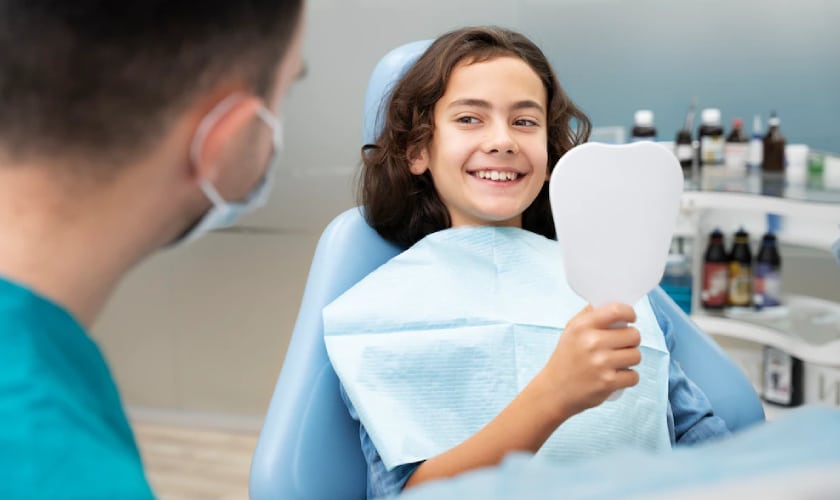
As soon as your child gets their first tooth, it’s time to make an appointment at the dentist. The ADA says that a child should go to the dentist for the first time no later than their first birthday or six months after their first tooth comes in. Please don’t wait until they start school or something goes wrong. Get your child used to good oral health habits right away.
Even though the main goal of the first visit is for the dentist to check your child’s growth and development and look at their mouth, it’s also important that your child feels at ease. To make the visit positive:
Consider making an appointment in the morning, when kids are usually more rested and willing to work with you.
- Don’t tell anyone about your worries or stress. Children can sense how you feel, so focus on the good.
- Don’t use a trip to the dentist as a threat or punishment.
- Never try to bribe your child.
- Talk about going to the dentist with your child.
- During this visit, the dentist will likely:
- Check for injuries, cavities, and other problems in the mouth.
- Tell you if your child is at risk of getting cavities.
- Clean your child’s teeth and show them how to take care of them daily.
- Talk about teething, using a pacifier, or sucking your finger or thumb.
- Talk about treatment, if needed, and set up the next appointment.
Problems With Kids’ Teeth That Are Common
Teeth That Hurts
The enamel on the outside of the tooth keeps bacteria from getting in. When the enamel wears away, the tooth is more likely to get an infection or decay. It also makes your teeth sensitive, which hurts a little when you eat or drink something hot or cold. Tooth sensitivity can happen to anyone, but kids are more likely to have it because their teeth have less enamel than permanent teeth.
Loss Of Teeth
Parents should know that their kids are more likely to have a decaying tooth than they think. Studies show that almost 45% of children between the ages of 2 and 5 have at least one decaying tooth. Since it’s hard to spot a cavity in its early stages, kids should visit the dentist regularly.
Initial Gum Disease
Even though gum disease and infections happen more often in adults, children can also get them. If your child’s gums are red and swollen, you should take them to a pediatric dentist. They can give the right treatment and help keep problems from getting worse in the future.
Teeth That Are Out Of Place
Malocclusion, or dental misalignment, is a condition where the teeth are crooked, crowded, or not in the right place. It can be passed down from parent to child or be caused by sucking your thumb or fingers for a long time. It is especially clear in kids between 6 and 12 years old.
Teeth That Are Loose Because Of An Injury
When children play, they often hurt their teeth or make them loose. Most parents don’t worry too much about this problem because they think it will disappear when the child gets permanent teeth. But, depending on how bad the wound is and what kind it is, the best dentist for kids may be able to pull the tooth and stop any more problems.
Other Problems with Teeth
Kids often have halitosis, which means they have bad breath. It happens when bits of food left in the mouth break down. Canker sores are also common in children. Small sores inside the mouth usually appear on the tongue, lips, and cheeks. If you are interested in keeping your child’s teeth healthy then visit our pediatric dentist for an expert opinion.